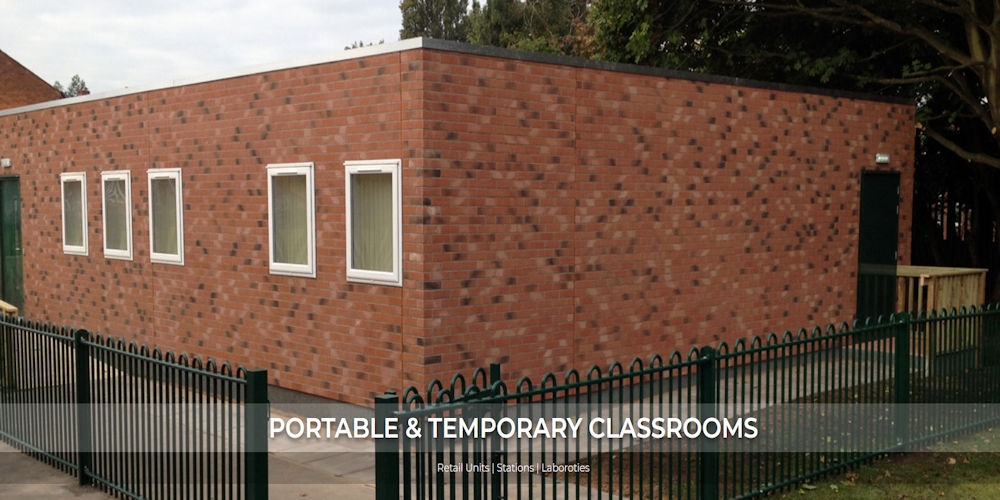

Why Portable and Temporary Classrooms in Education Are On the Rise
Across the UK, portable and temporary classrooms are moving from being a last‑resort stopgap to a mainstream, strategic solution for schools, academies and colleges. Faced with growing pupil numbers, fluctuating roll forecasts and tight capital budgets, many education leaders are turning to modular classrooms and temporary school buildings as a faster, more flexible and more affordable way to create additional learning space. Instead of waiting years for a traditional brick‑and‑mortar extension, schools can now access high‑quality, permanent‑feel teaching accommodation in a matter of weeks, enabling them to respond quickly and confidently to change.
What Are Portable and Temporary Classrooms? Definitions and Key Features
Portable and temporary classrooms are prefabricated modular classroom units that are manufactured off site, delivered to school grounds and installed with minimal disruption. Often referred to as demountable classrooms or prefabricated school buildings, these structures are designed either for short‑term use or for longer‑term deployment, depending on a school’s needs.
In simple terms, portable classrooms are self‑contained teaching spaces that can be moved, relocated or reconfigured more easily than traditional buildings. Temporary classrooms usually describe units intended to meet an immediate or medium‑term requirement, such as accommodating a bulge year, decanting pupils during refurbishment, or housing a new provision while longer‑term plans are developed. Modern modular units come with all the essentials you would expect from a contemporary teaching environment: proper insulation, heating and cooling, integrated electrics and data, toilets and washrooms if required, and full compliance with UK building regulations. The key features are speed, flexibility and quality – a combination that makes them particularly attractive to today’s education sector.
The Growing Need: Overcrowding, Pupil Place Pressures and Changing Roll Numbers
Many UK schools are operating at or near capacity, with classroom space shortages becoming a familiar challenge for headteachers and business managers. Rising pupil numbers in certain localities, new housing developments and demographic shifts can all create sudden pressure on school places. At the same time, changing roll numbers and funding uncertainties make long‑term estate planning increasingly complex.
Traditional school expansion solutions, such as permanent brick‑built extensions, can be time‑consuming, expensive and difficult to align with fluctuating demand. Planning, tendering and building often take years, while schools need additional teaching space within months. Portable and temporary classrooms offer a practical answer to these capacity issues. They provide quick classroom extensions that can be scaled up or down as required, allowing schools to cope with bulge years, new intakes or short‑notice expansions without compromising class sizes or the quality of the learning environment. For many governing bodies, modular classrooms have become an essential tool for managing estate pressures intelligently and responsively.
Benefits of Portable and Temporary Classrooms for Schools and Colleges
The advantages of portable classrooms go well beyond simply adding extra square metres. They offer a cost‑effective classroom solution that can be tailored to both short‑term and long‑term needs. Because the bulk of the construction work takes place off site, rapid classroom installation is possible – often during a single holiday period – meaning schools gain the space they need far more quickly than with traditional builds.
Flexibility is another major benefit. Modular school buildings can be extended, reduced, reconfigured or moved as needs change, making them ideal for growing academies, multi‑academy trusts and colleges managing multiple campuses. They also support the creation of adaptable learning spaces: open‑plan areas, breakout rooms, group work zones and specialist teaching areas can all be designed into the layout. Crucially, installation typically involves minimal disruption to teaching and day‑to‑day school life. Noisy and messy construction activities are largely completed off site, so pupils and staff can continue their work with little interference. Taken together, these benefits make portable and temporary classrooms an attractive, low‑risk way of improving a school’s estate quickly and efficiently.
Design, Comfort and Modern Facilities: Debunking Myths About ‘Portakabins’
Many people still associate temporary classrooms with the old‑fashioned “Portakabin” style huts of decades past: cold in winter, hot in summer and short on character. Modern reality is very different. Today’s high‑quality modular classrooms are designed to be bright, comfortable and durable, providing a teaching environment that feels every bit as permanent as a conventional building.
Energy‑efficient temporary classrooms now come with high‑performance insulation, double‑glazed windows, efficient heating systems and ventilation designed for good indoor air quality. Acoustic performance is carefully considered to reduce noise and support concentration. Contemporary internal finishes, smart storage, interactive display walls and integrated IT infrastructure ensure that these units look and function like modern school buildings rather than makeshift add‑ons. Externally, cladding options and architectural details can be chosen to complement existing school buildings, helping the units blend seamlessly into the campus. As a result, many staff and pupils quickly forget they are teaching and learning in “temporary” accommodation at all.
Cost and Budget Considerations: Hiring vs Buying Portable Classrooms
In an era of tight school capital budgets, cost is a decisive factor in any building project. Portable classrooms provide valuable flexibility here too, as schools can choose between hiring temporary classrooms or buying modular buildings outright. Hiring can be particularly attractive for short‑term or uncertain needs, such as a temporary bulge in pupil numbers, a refurbishment project, or a site‑sharing arrangement. It allows schools to secure high‑quality space without a large upfront capital outlay, treating the cost as an operating expense over the period of use.
Buying a portable classroom may offer better value for money in the longer term, especially where additional space will be needed for many years. The cost of modular classrooms is typically lower than traditional construction, and because the build process is more predictable, schools often face fewer unexpected overruns. When considering short‑term versus long‑term solutions, leadership teams can work with suppliers to model lifecycle costs, including maintenance, relocation potential and residual value. In many cases, a blended approach is used across a trust or local authority – some units are hired for short‑term pressures, while others are purchased as part of a strategic estates plan. This financial flexibility is a key reason why modular solutions are gaining favour with school business managers and governors.
Planning, Regulations and Compliance in the UK Education Sector
Any building used by pupils must meet strict standards, and portable classrooms are no exception. In the UK, planning permission for temporary classrooms may or may not be required depending on size, location and duration of use, but reputable suppliers will guide schools through the process and liaise with local planning authorities where needed. Regardless of planning status, all units must comply with relevant building regulations, covering structure, fire safety, accessibility, ventilation, energy performance and more.
Government and DfE guidance on school buildings sets out expectations for space standards, safeguarding and suitability, and modular classrooms are designed to align with these requirements. Ofsted, while not inspecting buildings per se, expects that accommodation is safe, appropriate and conducive to learning, so design and compliance are critical. Accessibility is another non‑negotiable element: ramps, level thresholds, wider doorways, appropriate toilets and clear circulation routes can all be incorporated into portable classrooms to support pupils and staff with disabilities. When working with experienced modular providers, schools can be confident that safety standards and regulatory requirements are fully addressed from the outset.
Speed of Delivery and Installation: Getting Extra Classroom Space When You Need It
One of the strongest arguments in favour of portable and temporary classrooms is speed. Fast‑track classroom solutions can move from initial enquiry to handover in a fraction of the time it takes to commission a traditional build. Because units are manufactured off site in controlled factory conditions, construction can proceed in parallel with groundworks, services connections and any planning processes.
Rapid deployment classrooms can be installed within tight timeframes, frequently during half‑term or summer holidays, so that pupils return to find new facilities ready for use. Even where term‑time installation is unavoidable, off‑site construction and careful scheduling ensure that on‑site disruption is kept to an absolute minimum. Deliveries, crane lifts and noisy works can be timed around the school day, while health and safety measures separate works from pupils and staff. For schools that need additional space “yesterday”, the ability to deliver high‑quality accommodation at such pace is a transformative advantage.
Customisation: Tailoring Portable Classrooms for Different Educational Uses
Another key strength of modular buildings is their versatility. Portable classrooms can be customised to support a wide range of educational uses, far beyond a simple general‑purpose teaching room. For example, science lab modular units can be fitted out with specialist services, fume cupboards, gas and water supplies, robust surfaces and secure storage. SEN classrooms can be designed with sensory‑friendly finishes, acoustic treatments, calming breakout spaces and dedicated support areas.
Early years modular buildings can incorporate direct access to outdoor play areas, low‑level fittings, child‑friendly toilets and space for free‑flow activities. Sixth form centres might feature seminar rooms, quiet study zones, social spaces and café facilities. Schools can also use modular buildings as temporary school offices, staff rooms, libraries, music suites or specialist teaching spaces such as art and design studios. Layout, finishes, lighting and technology can all be tailored to the intended use, ensuring that the building supports teaching and learning effectively from day one.
Sustainability and Environmental Impact of Temporary Classroom Buildings
Sustainability is an increasingly important consideration for schools and trusts, both in terms of environmental responsibility and operating costs. Modern eco‑friendly modular classrooms are designed with energy efficiency and low‑carbon construction in mind. Off‑site manufacturing reduces waste, and materials can be selected for durability and recyclability. High levels of insulation, efficient heating systems, LED lighting and options for renewable technologies such as solar panels all help to reduce running costs and environmental impact.
Because modular units are reusable, they support a more circular approach to school building. A classroom installed at one site can, in some cases, be relocated and repurposed elsewhere, extending its life and reducing the need for new materials. For schools seeking to demonstrate their commitment to sustainable school buildings, temporary and modular solutions can form an important part of their estates strategy. Over time, energy‑efficient teaching spaces contribute not only to lower carbon emissions but also to more comfortable, stable internal environments that benefit pupils and staff.
Choosing the Right Portable Classroom Provider
Selecting the right modular classroom supplier in the UK is crucial to achieving a successful outcome. Headteachers and business managers should look for experienced providers with a strong track record in the education sector, evidenced by case studies, references and repeat clients. A good provider will offer a genuinely turnkey school building solution, managing design, planning, groundworks, installation and commissioning, and providing clear timelines and communication throughout.
Design‑and‑build contractors who understand curriculum needs, safeguarding, SEND requirements and DfE guidance can add real value at the planning stage. It is also important to assess product quality, warranties and aftercare support. Robust guarantees on structure, finishes and key components will give confidence that the building will perform as expected over time. Responsive aftercare, including maintenance options and the ability to adapt or extend the building in future, should be part of the package. Ultimately, the right partner will help school leaders navigate every stage of the process, from initial feasibility to handover and beyond.
Future Trends: The Role of Portable and Temporary Classrooms in the Evolution of Education Estates
Looking ahead, portable and temporary classrooms are poised to play an increasingly central role in how UK education estates develop. As teaching models evolve towards more flexible, hybrid learning environments, schools will need buildings that can adapt quickly. Modular, scalable classroom solutions are inherently suited to this future, allowing spaces to be reconfigured, expanded or relocated in response to changing curriculum demands, technology and community needs.
Long‑term modular strategies are already being adopted by forward‑thinking trusts and local authorities, who see modular buildings not merely as temporary fixes but as core components of flexible estate planning. The ability to roll out new teaching spaces rapidly also supports policy initiatives, such as the creation of specialist provisions, alternative provision hubs and satellite sites. In this context, the distinction between “temporary” and “permanent” becomes less important than whether buildings are high‑quality, adaptable and aligned with educational goals.
Why Portable and Temporary Classrooms in Education Are a Smart Investment Now
For school leaders, governors and business managers facing immediate pressures and long‑term uncertainty, portable and temporary classrooms represent a smart, strategic investment. They enable schools to improve learning environments rapidly, providing pupils and staff with modern, comfortable, well‑equipped spaces without the long delays and high costs associated with traditional construction.
By incorporating modular buildings into strategic estates planning, schools and trusts can respond more quickly to demographic change, curriculum developments and funding opportunities. They gain the flexibility to scale up or down, to trial new provisions, and to maintain educational continuity during refurbishment or expansion. At the same time, energy‑efficient, reusable classroom units support sustainability objectives and help control running costs.
For many in the UK education sector, the question is no longer whether to use portable and temporary classrooms, but how best to deploy them across their estate. Those who act now, and partner with reputable modular specialists, can secure high‑quality, future‑proof teaching space that supports both immediate needs and long‑term ambitions for their pupils and communities.